




Measures to eliminate emissions from the UK’s built environment will require an estimated £1.15 trillion to 2050. About £500 billion of these measures fall within the purview of local authorities, representing an investment requirement of £20 billion per year to 2050. PwC estimates that about 50% of this investment will need to come from the private sector. The existing squeeze on local authority budgets means that attracting private investment to net zero projects is more important than ever. Yet, 9 out of 10 councils do not believe there is a sufficient financing plan in place to reach net zero by 2050, and 73% say the bureaucracy and uncertainty of government funding is unattractive to private investors.
The financial cost of inaction is great, too: Investing in climate measures over the next 25 years has the potential to reduce financial losses by 50% over the next 75 years versus doing nothing. Put another way: Doing nothing will double financial losses versus taking action now.
The Net Zero Delivery Vehicle has been specifically developed to address these challenges.
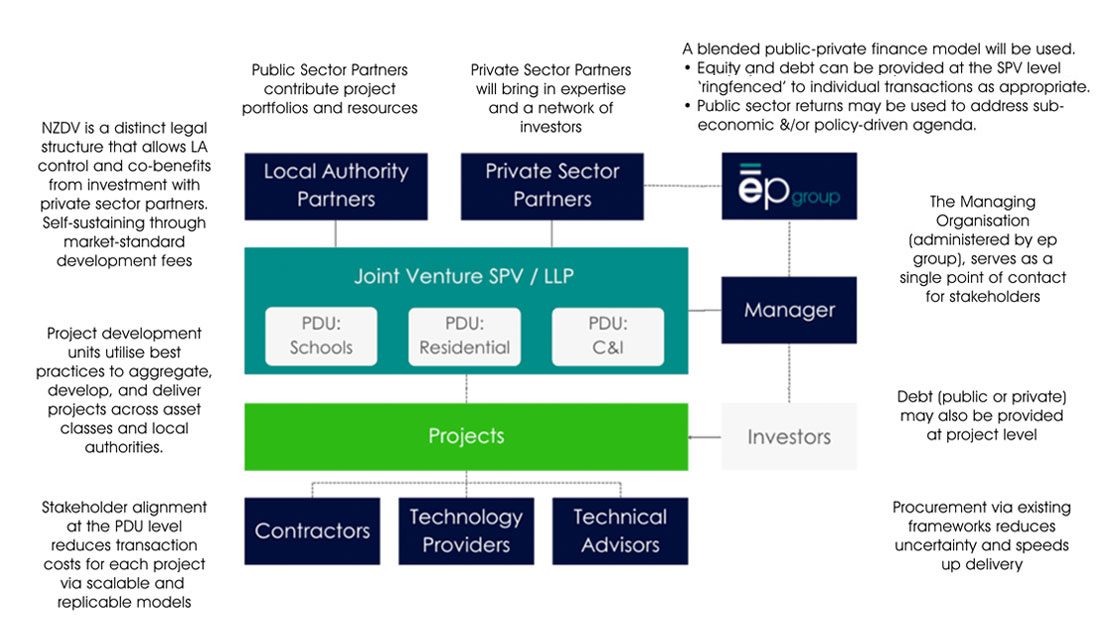
The Net Zero Delivery Vehicle is a proposed strategic partnership and governance structure between local authorities and private sector partners to accelerate and quality-assure the delivery of local net zero projects. The concept has been developed in conjunction with local authorities since 2021, and the core team has worked together since 2022 through funding from the Greater South East Net Zero Hub and Innovate UK Net Zero Living: Pathfinder Places project.
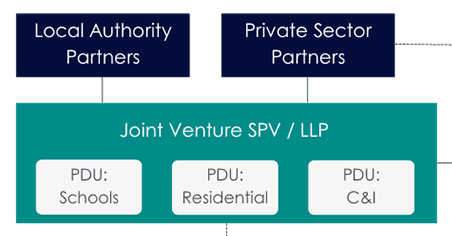
NZDV is a distinct legal structure that allows LA control and co-benefits from investment with private sector partners. Self-sustaining through market-standard development fees
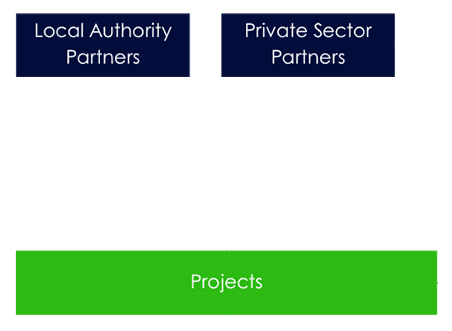
Public Sector Partners contribute project portfolios and resources
Private Sector Partners will bring in expertise and a network of investors
The Managing Organisation (administered by ep group), serves as a single point of contact for stakeholders
Debt (public or private) may also be provided at project level
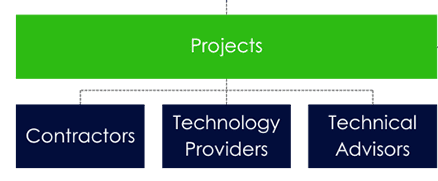
Procurement via existing frameworks reduces uncertainty and speeds up delivery
Stakeholder alignment at the PDU level reduces transaction costs for each project via scalable and replicable models
Project development units utilise best practices to aggregate, develop, and deliver projects across asset classes and local authorities.
The Shift to Net Zero project aimed to accelerate the adoption of private finance in net zero infrastructure development. Since 2021, our consortium of public and private-sector partners has been developing the Net Zero Delivery Vehicle to address challenges specific to smaller local authorities across the UK. The Shift to Net Zero project was grant-funded as part of the Innovate UK Net Zero Living: Pathfinder Places project.
To find answers to the most common questions about the Net Zero Development Vehicle (NZDV), including how it works in practice and what it means for local authorities and delivery partners, visit the FAQ page below.